Brad Now on Substack: Watching Rome Burn
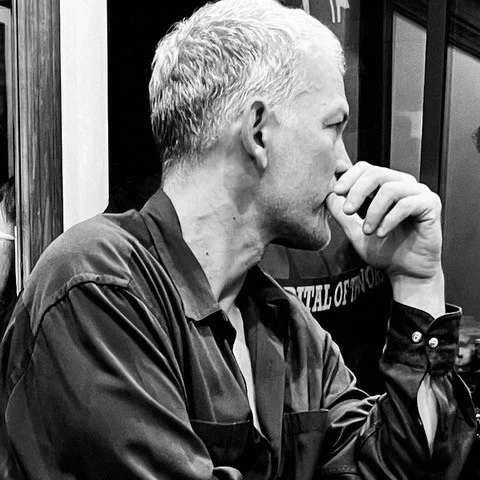
Hi everyone, thanks for tuning in. I’ve been reading other writers on Substack for a while now, and believe in the format. I’ve decided to start posting and have started a Substack publication, Watching Rome Burn. There, you can read this new introductory essay, with more to come.
You will continue to receive my newsletter with updates on what’s going on with me, including tour notifications, record release info, and short excerpts of my writing - now via Substack. Click subscribe to upgrade for exclusive access to new essays I will publish here for the first time.
Subjects will likely include: art (with a focus on music, literature and film), philosophy, theology, and politics (current, and from a historical perspective). What interests me is how these bodies of knowledge intersect and inform each other: for example, how one might find guidance for the current political climate in philosophical texts and scripture; or how one might find inspiration for a personal ethic through an artwork. (This inspiration is often reversable and omnidirectional. One might just as well receive inspiration and guidance for creating an artwork from a particular ethical standpoint.)
At the same time, the intersection between these disciplines implies conflict: for example, between an aesthetically-driven vs. an ethically-based way of living; or between a (rationalist-secular) philosophical outlook vs. one informed by religious faith. My favorite kind of writing on these subjects is the kind which not only diagnoses these conflicts but finds new meaning in the conflict itself. So, staying with those two examples: We are admonished that the pursuit of beauty, in itself, is a dead-end, and leads us astray, ethically speaking. When one probes further though, one finds that ethics and aesthetics, however in conflict, are also intertwined. For there is another perspective in which truth – moral truth, righteousness – is beautiful, in which righteousness and beauty are even synonymous to a degree.
Likewise, it seems to me that faith, far from undermining our rational faculty, is a large part of what drives it. And, from my own experience, a true faith is built, however paradoxically, through constant questioning – the kind of questioning that we associate with a more materialist, non-believing frame of mind. Faith – building it, losing it, finding it again – is a subject that I will also address here. Those posts will be more autobiographical, as they must. A testament of faith must be based in one’s own experience, or it means nothing.
The apprehension that morality is beautiful, and that rationality involves a measure of faith; or that beauty is potentially is ethical, and faith is potentially rational, points to a large, bewitching mystery. Confronting this kind of mystery is why I love to read. The fact that Substack is thriving tells me that other people seek this mystery. Now, we can all pat ourselves on the back if we wish, that we are endeavoring to edify ourselves, and not just zone out on other forms of social media. We all love to read; that is well and good. I have something more reptilian in mind as well, though: We love reading, because the moment of edification gives us a hit. The paradox of an idea, the mystery in it, and the way it then clarifies something and opens up a new vista simultaneously – this is the kick.
This kind of pleasure, as a means to its own end, already demonstrates, if you’ll allow me, that link between beauty and morality. For there is something good and righteous in this pleasure, just as there is a pleasure in the good. When we read the kind of writing I’ve described – writing that diagnoses a given conflict, and finds new meanings and insights within a seeming impasse – we are not just trying to become smarter. We are endeavoring to better ourselves, to some degree. We are trying to find truth for ourselves, to not lie to ourselves, so we don’t lie to others. Reading – reading closely, grappling with the paradoxes that a text raises – has an ethical dimension. If that sounds romantic or overblown, consider the alternative – that it serves no purpose other than diversion or entertainment. That doesn’t cut it for me.
Coming back to the subject of faith: The frame we place around it is often a religious one, and when readers encounter that term in English, they may associate it with Abrahamic religion – for example, what Paul has to say about the matter in his epistles. I would like to write in a way that engages in this biblical orientation towards faith. At the same time, I am very much interested in religious syncretism, because I am a syncretist myself. My own faith is informed by Buddhist, Vedantic and Yogic scripture, as well as the Bible. There are fundamental differences in these religious traditions, perhaps most notably in the nature of the divine presence. I will touch on that, and a little bit about my own faith, in what follows.
In broad strokes, the Abrahamic God is a transcendent one, apart from us, and in much of the Indic religious tradition I have in mind, that divine presence is often immanent – everywhere, even within us. Yet, of course, that is far from black and white: In the mystical tradition within Christianity, there are descriptions of a more immanent God, one we meet in our direct experience in this world, and also residing within us. Likewise, in the Indic spiritual realm, there are a myriad of devotional faith/practices, towards a more transcendent figure, like the Bodhisattva, or Krishna.
There is this need for me to pray. Prayer means many things, but here are three big ones: Asking for help, because I can’t do something or figure something out on my own; Giving thanks, because I am aware that I didn’t achieve this beautiful thing on my own – that it is a gift. The third is a kind of telling on myself: I acknowledge I did this wrong thing, and it goes against Your will. I want to make it right.
There you go – if you don’t believe in the transcendent God, you might push back on that last one in particular. You might read, “Your will,” and think – he’s into the language of sin, and a judging Father God. Well…yes. But I’m also aware that “Your,” in that phrase is just as well an expression of my own conscience – my own moral voice, my super-ego, as Freud envisioned it, but also, something divine in that immanent sense, immanent with me. I want to stress that I don’t see those two outlooks as incommensurable. I think that a lot of other people don’t either, but that we are mired in language that segregates them into categories – metaphysical, psychological, religious, etc.
Going back to prayer, though: I can also just say, in my end-of-the-day moral reckoning, “I acknowledge I did this wrong thing to myself, and it goes against my own better will.” I do that, for sure, but…it’s not the same. Acknowledgement to oneself is not the same as acknowledgement to another. When I “tell on myself”, I am showing my weakness, and this willing act of humbling myself towards another is directly beneficial: it is a salve against my pride. If we’re in that theological language, pride is the most pernicious of sins – as St. Augustine envisioned it, it was the Original One that led to the Fall. It’s the sin that opens the floodgate to the other ones, because it allows us to justify them.
But again, if you don’t like the theology, skip that bit, and we can all agree: telling on ourselves helps keep our pride in check. If I share with someone else something that I’m uncomfortable about that I’ve done or thought, something that even makes me ashamed, it has an added benefit – it lets the light of truth shine through. It lets the person I am on the inside be the same one on the outside, to my fellows. That brings sweet relief.
So then…why not just tell another good-old-human – a close buddy, your partner, your therapist, someone you trust? Why the God stuff? Indeed – confiding frankly in someone close to me is irreplaceable, of absolute value. But another human is no more infallible than I am. They might co-sign my b.s.; they might use it against me. They might simply be indifferent, not really listening. And I’m talking about friends. This is what it means to be humans. We love each other, but we disappoint the heck out of each other at times. We err. So I need someone to frankly share my stuff with – all of it, the good, the bad, the ugly – someone who is not me, yet someone who rises above my constant failing, yet forgives it. There’s your transcendent God. Sorry – there’s my transcendent God, in my understanding.
“But wait,” someone could say: “Call it what you want. From where I’m standing, when you’re “praying”, you’re just talking to yourself.” Yep. And then we’re into all the problems of a transcendent God. Here’s one big one, maybe the granddaddy. I’ll put it in that same skeptical voice, addressing me:
“You say you pray to hold yourself accountable, to keep your pride in check. But who’s checking you? You pray, then you feel virtuous. What if you’re just recycling your own pride, though, making it even stronger?” To which I say: For sure, it’s the greatest pitfall – spiritual pride. It goes hand and hand with what I would call religiosity, versus true religious feeling. And it can lead to destructive fanaticism.
Nevertheless, if you renounce the idea of a transcendent God, you renounce prayer – or so it seems to me. This is one of those perennial conflicts for me, but it has been a “good” one, in the sense I mentioned. It’s raised tough questions which I need to ask, in order to put my faith into practice. I don’t necessarily get a succinct answer to those questions, but hashing them out has a beneficial effect on me – it strengthens that faith over time. I will explore these kinds of conflicts here. I don’ think for a minute that everyone needs to ask these or other questions about their faith, but I know there are others like me who do.
We understand faith to be a mental state which is ultimately free of questioning. The key word there is “ultimately”. In my own experience, it has often been the case (but not always) that I reach a state of non-questioning precisely through asking a bunch of questions. A truly committed stance, whether devout, agnostic or atheist, implies both asking tough questions, andhaving a grounded answer. Credulity and self-satisfied certainty are not the exclusive domain of religious people. just as endless ironizing and parsing of points are not a luxury only for the agnostically-mined.
What is faith, though? We often say that it is a form of belief. This is true, but belief in what? Here is my working definition of faith, the one which will apply whenever I write about it here: Faith is a belief that the good will prevail in the long run, that there is a force of benevolence in the world that overcomes evil. That force is Love. It is thus perfectly possible to have a strong faith and to be a committed atheist, in my understanding of the matter. I am not one. Yet when I write about faith here, I am writing as well to atheists of all stripes. The common ground is Love. So, to reiterate:
Faith for me is belief in the indestructible power of love.
And then, just as this starts slipping into a platitude…what is love? Well, it’s an action, not a stance. Love is faith in action. Here is James in his epistle:
What does it profit, my brethren, if a man says he has faith but has not works? Can his faith save him? If a brother or sister is ill-clad and in lack of daily food, and one of you says to them, “Go in peace, be warmed and filled,” without giving them the things needed for the body, what does it profit? So faith by itself, if it has no works, is dead.
But someone will say, “You have faith and I have works.” Show me your faith apart from your works, and I by my works will show you my faith.
James, 2.8-18
Without the action of love, James says, faith is a platitude, nothing more. It’s easy to read this strong pronouncement as a rejoinder to Paul, in one of those moments that makes the Bible come alive – when one figure seems to be shouting at another through a chasm rigid belief. In this case, the issue is Paul’s assertion that faith, and faith alone, can bring salvation. James pushes back, saying that faith alone isn’t enough – you have to do good “works” as well, which means performing acts of kindness, and also means obeying established moral laws.
If you’re an artist, you might write beautiful words, tell stories on the screen, or create sublime music that attests to your faith in something divine and ineffable. Yet you might be shirking on your works, forgetting about the people you love, only basking in your own creations; and your actions may run counter to the light and love you seem to convey those creations.
On first read, it sounds like James is calling Paul out, or if not Paul himself, a hypocritical person who talks about their faith but doesn’t walk the walk. “Come on,” he might say to Paul, “forget about your pie-in-the sky solo fide. Just be kind and don’t be a jerk. See if you can pull that off for a few days. Be nice, and not a scold, to all these earnest folks who are trying to help you spread the good news and build churches with you.”
Yet James isn’t really refuting Paul. He’s not setting up a conflict between faith and works. He is not saying that works alone, without faith, will suffice. We see that in the final line of his short epistle above, in which he addresses a hypothetical counter-figure who says they only need works, and not faith. He responds, proclaiming, “I by my works will show you my faith.” The message becomes clear: Neither faith nor works have primacy over the other. Faith inspires us to be kind and giving, and our kind acts, in turn, generate our faith. They work in tandem.
So much of the time, though, this call to put faith in loving-action is add odds with the life I live. There is no way to write this eloquently; there is no way to “signal” my own virtue in this regard. Much of the time, I am watching Rome burn. I am sitting in my bubble of comfort and wealth, for the time being. Yet my whole way of life is complicit in evil. It is the evil built into a political structure which has never been truly egalitarian, which has always rewarded some fortunate ones and disenfranchised many others. Truly acknowledging the scope of this evil and my own complicity in it – complicity in the sense of my benefitting at the expense of those who have been deprived – is a kind of telling on myself. It doesn’t change the situation, but it aligns me toward (loving) action, and away from glibness, apathy, ennui – all those forms of inaction.
Considering this though, when I go back to the conviction I stated above, that there is something “good and righteous” in the pleasure I take in self-edification, it not only rings hollow, but sounds foolhardy, even perverse. Rome is Burning. And I’m sitting here reading, and writing about it? When I call my Substack “Watching Rome Burn”, I’m not being ironic or snarky. I’m being sincere. There is an unresolvable tension between the political action which I am not taking, overtly, and the inaction of sitting here writing this. I want to keep that in the forefront for myself and for the reader.
Is writing a political action, or is it inaction? I think it can be both, simultaneously. We should keep in mind that when we write about “political action” or so-and-so being “politically committed” we are tacitly implying that the politics are good. Good for who? For our team, or for everyone? That leads to a whole array of other questions, but a quick definition of a “good” politics would be one that takes the principle of love as faith-in-action and applies it to the polis – to the people within a governed society. Needless to say, it is as many times more difficult to achieve a loving political state as there are people in that state, compared to the direct action of one person loving another directly. But it’s not impossible. The best political achievements in my country of origin, The United States, attest to the possibility. Some of the worst political achievements in the United States, if you want to call them that, have been unfolding before us as of late. That is a partisan statement, but you’ve probably already gathered my orientation if you’ve read some other things I’ve written.
Going back to the question of whether writing could be a political action, and having defined a “good” one: for all the pessimists out there, of which I include myself in many moments, another way of answering that question would be to consider whether writing can be a bad political action, an action towards evil and away from love and light. Pessimists, being pessimists, can quickly agree that a well-written screed can stir up hatred effectively. Misinformation, as we are seeing, is a relatively new but powerful and destructive tool. However you look at it, another way of putting this is the old adage: ideas count. They don’t actually move the mountains, but they inspire people, in any number of ways.
Here is what to expect from me on Substack: I will be publishing new material, primarily essays like the one here. All subscribers will receive my newsletter with updates on what’s going on with me, including tour notifications, record release info, and short excerpts of my writing. A full subscription will also include exclusive access to new essays I will publish here for the first time.
I’ve been writing shorter form essays for a few decades now, so I will most likely move them onto Substack as well, in dribs and drabs, as public free posts (for instance, the essay “The Law of Love” which appeared on my website several months ago which is up here).